Do Silverback Gorillas Eat Meat?
June 1, 2026
What is the Size of Murchison Falls National Park?
June 2, 2026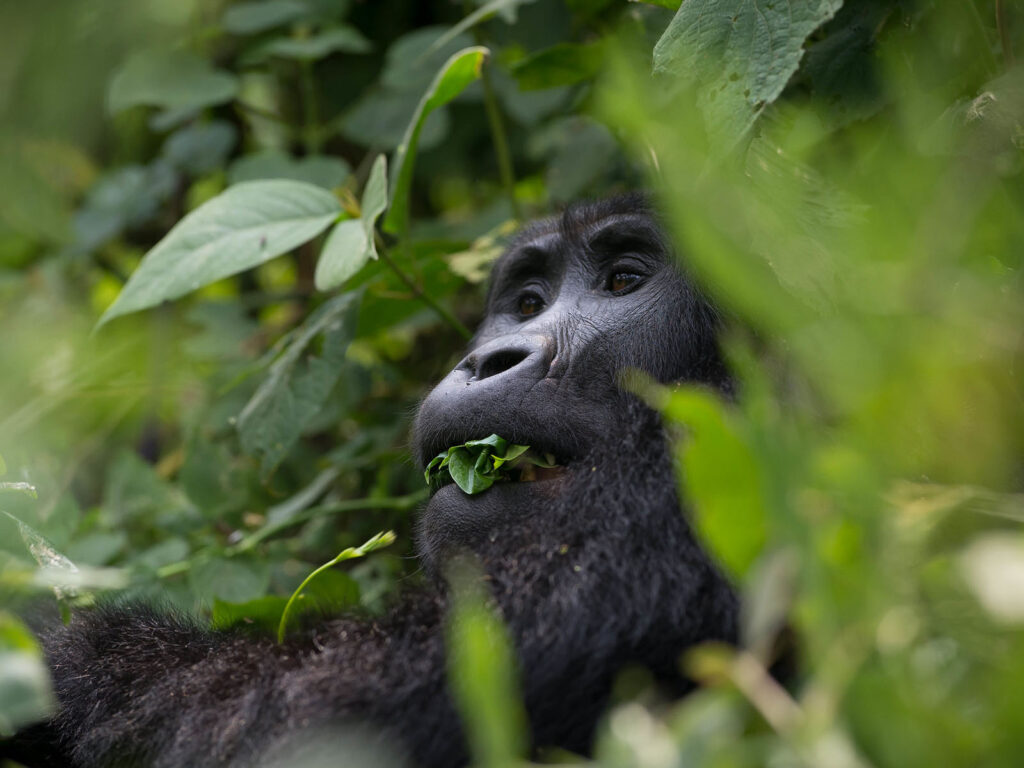
What Food Do Gorillas Eat?
What Food Do Gorillas Eat? This is one of the most fascinating questions asked by travelers preparing for unforgettable Gorilla Safaris in East Africa. Visitors embarking on Rwanda Safaris and Uganda Safaris are often eager to learn more about the daily lives of mountain gorillas before meeting these extraordinary primates in their natural habitat. Beyond their impressive size and remarkable intelligence, gorillas are known for their unique feeding habits, which play a crucial role in maintaining the delicate ecosystems of Africa’s mountain rainforests. Understanding What Food Do Gorillas Eat? not only enriches the trekking experience but also provides valuable insight into the conservation efforts that protect one of the world’s most endangered species.
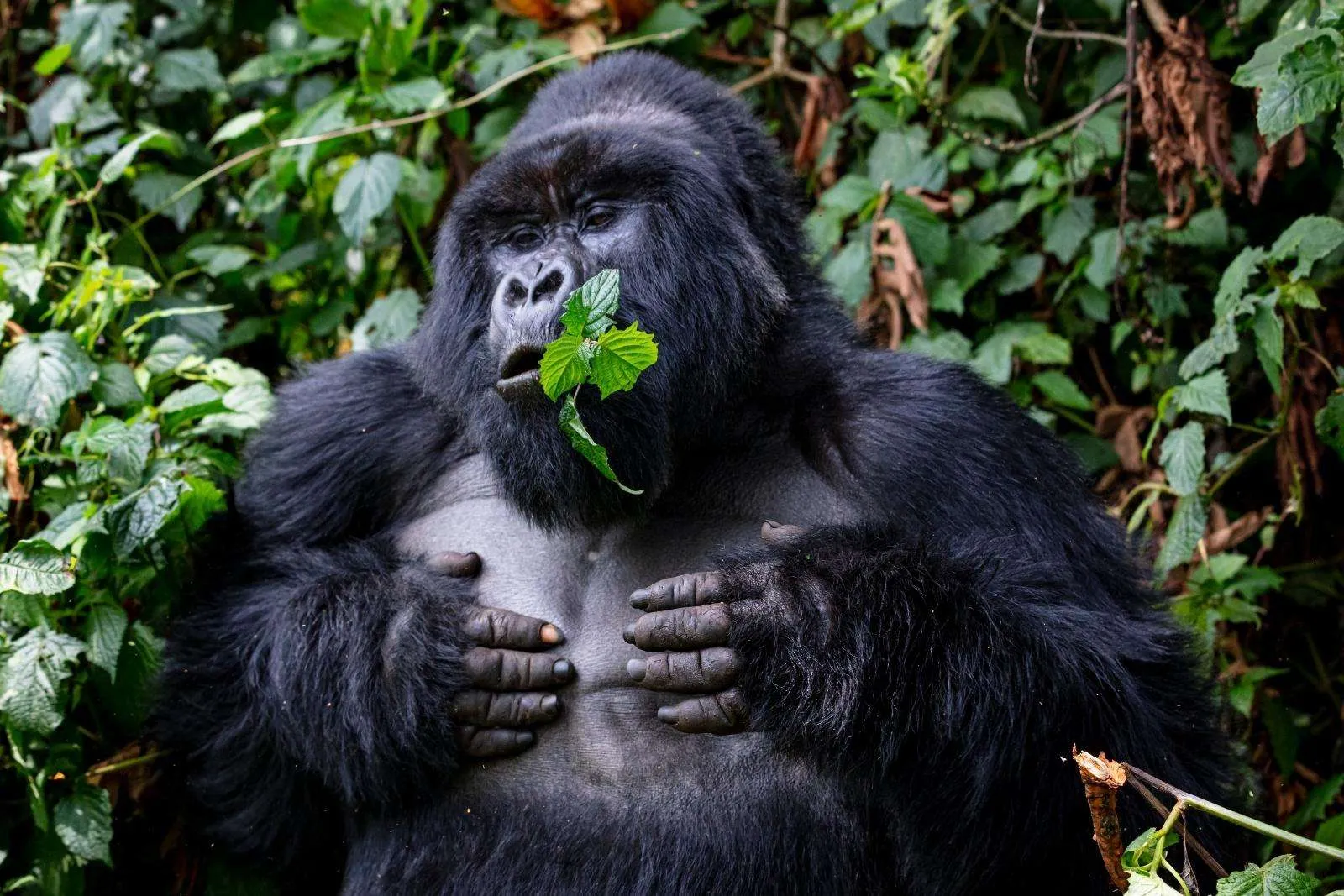
Deep within the mist-covered forests of Rwanda and Uganda, mountain gorillas spend much of their day searching for food. Unlike many large mammals that rely on hunting or scavenging, gorillas are primarily herbivorous and depend on a diverse range of vegetation to meet their nutritional requirements. Every Gorilla Safari presents a rare opportunity to observe these gentle giants feeding naturally as they move through dense vegetation under the guidance of a dominant silverback. Such encounters allow visitors to appreciate the complexity of gorilla behavior while gaining a deeper understanding of the forest ecosystems that sustain them.
Throughout Rwanda Best Safaris and Uganda Best Safari experiences, guests frequently witness mountain gorillas carefully selecting leaves, stems, shoots, fruits, roots, and other plant materials. Conservation experts have spent decades studying these feeding patterns, revealing how gorillas contribute to seed dispersal and forest regeneration. Consequently, the answer to What Food Do Gorillas Eat? extends far beyond diet alone; it highlights the essential ecological role these magnificent primates play within their environment. For wildlife enthusiasts seeking meaningful and educational travel experiences, learning about gorilla nutrition becomes an integral part of discovering Africa’s most treasured wildlife destinations.
What Food Do Gorillas Eat in Rwanda?
When exploring What Food Do Gorillas Eat?, Rwanda offers one of the finest destinations for observing mountain gorillas in their natural environment. Rwanda Safaris provide access to Volcanoes National Park, where several habituated gorilla families inhabit the lush slopes of the Virunga Mountains. Within this remarkable ecosystem, gorillas feed on a wide variety of vegetation that flourishes throughout the year due to favorable climatic conditions and rich volcanic soils.
Among the most commonly consumed foods are bamboo shoots, wild celery, thistles, nettles, vines, leaves, bark, and tender stems. Different seasons influence food availability, encouraging gorilla families to adjust their feeding patterns according to what is most abundant. Skilled ranger guides leading Rwanda Best Safaris often explain how gorillas spend many hours each day gathering and consuming plant material to support their large body size and energetic lifestyle. Unlike carnivorous wildlife species, gorillas rely entirely on vegetation as their primary source of nutrition.
Visitors frequently observe silverbacks directing family members toward productive feeding areas where abundant food resources can be found. Such leadership demonstrates the important role dominant males play in ensuring group survival. During Gorilla Safaris in Rwanda, trekkers gain firsthand knowledge of how gorillas carefully select specific plant species based on nutritional value and seasonal availability. These observations provide compelling answers to the question, What Food Do Gorillas Eat?, while showcasing the intricate relationship between mountain gorillas and their forest habitat.
Additionally, Rwanda’s strong conservation initiatives help preserve the biodiversity necessary for sustaining healthy gorilla populations. Protection of natural vegetation ensures continuous access to essential food resources while supporting broader ecosystem stability. Therefore, understanding What Food Do Gorillas Eat? also highlights the importance of habitat conservation in safeguarding the future of mountain gorillas.
What Food Do Gorillas Eat in Uganda?
For travelers seeking a deeper understanding of What Food Do Gorillas Eat?, Uganda Safaris offer equally remarkable opportunities to observe feeding behavior among mountain gorillas. Uganda is home to a significant portion of the global mountain gorilla population, with most trekking experiences taking place in Bwindi Impenetrable Forest. This ancient rainforest provides an exceptionally diverse range of vegetation that supports gorilla families throughout the year.
Within Uganda’s dense forest environment, gorillas consume leaves, vines, roots, shoots, bark, fruits, flowers, and pith from various plant species. Nutrient-rich vegetation forms the foundation of their diet and provides the energy necessary for daily activities. During Uganda Best Safari adventures, guests often witness gorillas feeding peacefully while interacting socially with family members. Such moments create unforgettable wildlife experiences while offering valuable educational insight into gorilla ecology.
Experienced guides accompanying Gorilla Safaris frequently explain how gorillas can consume substantial quantities of vegetation each day. Powerful digestive systems enable them to process fibrous plant material that many animals cannot efficiently utilize. Consequently, mountain gorillas have evolved to thrive within environments where vegetation remains abundant year-round. Observing this feeding behavior directly answers the popular question, What Food Do Gorillas Eat?, while demonstrating the species’ remarkable adaptation to rainforest life.
Furthermore, Uganda Safaris provide opportunities to appreciate how healthy forests sustain entire gorilla populations. Conservation efforts aimed at protecting vegetation simultaneously safeguard countless other wildlife species that depend upon the same ecosystem. Every gorilla trek reinforces the importance of preserving natural habitats and ensuring that future generations can continue experiencing these extraordinary encounters. Through Uganda Best Safari experiences, visitors gain a profound appreciation for the intricate connection between gorillas, forests, and conservation.
Why Is Gorilla Diet Important for Gorilla Conservation?
Understanding What Food Do Gorillas Eat? is essential for anyone interested in gorilla conservation and sustainable tourism. Mountain gorillas depend almost entirely on healthy forest ecosystems for survival. Every leaf, stem, shoot, fruit, and root consumed by gorillas originates from habitats that require long-term protection. Consequently, preserving vegetation directly contributes to the wellbeing of gorilla populations across Rwanda and Uganda.
Conservation organizations working alongside tourism authorities recognize that protecting gorilla food sources is just as important as safeguarding the animals themselves. Revenue generated through Gorilla Safaris supports habitat preservation, anti-poaching initiatives, scientific research, and community development programs that strengthen conservation outcomes. Travelers participating in Rwanda Safaris and Uganda Safaris therefore play a direct role in supporting these critical efforts.
Moreover, studying feeding behavior helps researchers monitor environmental health and identify changes that may affect gorilla survival. Alterations in vegetation patterns can signal broader ecological challenges requiring immediate conservation action. Therefore, the question What Food Do Gorillas Eat? carries significant importance beyond wildlife curiosity, serving as a key component of effective conservation management.
 When Is the Best Time for This Safari?
Travelers interested in learning What Food Do Gorillas Eat? through direct observation can enjoy Gorilla Safaris throughout the year. Nevertheless, the dry seasons from June to September and December to February are often considered the most favorable periods for trekking. During these months, trails are generally less slippery and trekking conditions are more comfortable.
Despite seasonal differences, Rwanda Safaris and Uganda Safaris remain rewarding during every month of the year. Rainfall contributes to abundant vegetation growth, ensuring that gorillas always have access to the food resources they need. Consequently, visitors can observe natural feeding behavior regardless of the season chosen for travel.
Why Choose EcoQuest Safaris for This Particular Safari?
EcoQuest Safaris specializes in delivering expertly crafted Gorilla Safaris that combine unforgettable wildlife encounters with meaningful conservation experiences. Our extensive knowledge of Rwanda Safaris and Uganda Safaris enables us to design personalized itineraries that maximize visitor enjoyment while promoting responsible tourism practices.
Dedicated safari specialists work closely with guests to ensure every journey is seamless, informative, and memorable. Strong partnerships with experienced guides, quality accommodations, and conservation authorities allow us to offer some of the finest Rwanda Best Safaris and Uganda Best Safari experiences available. Every itinerary reflects our commitment to excellence, sustainability, and authentic African adventures.
Choosing EcoQuest Safaris means traveling with a company that values conservation, community empowerment, and exceptional customer service. Through our carefully curated Gorilla Safaris, visitors gain deeper insight into mountain gorillas while contributing to the protection of these incredible primates and their habitats.
Conclusion: What Food Do Gorillas Eat?
The answer to What Food Do Gorillas Eat? reveals the remarkable relationship between mountain gorillas and the forests they inhabit. Throughout Rwanda Safaris and Uganda Safaris, these gentle giants rely primarily on leaves, stems, shoots, roots, bark, fruits, flowers, and other plant materials to sustain their lives. Such feeding habits demonstrate their role as herbivores and highlight the importance of healthy ecosystems for their survival.
Experiencing Gorilla Safaris in Rwanda and Uganda offers an extraordinary opportunity to witness these feeding behaviors firsthand while supporting conservation efforts that protect endangered mountain gorillas. Through expertly guided adventures with EcoQuest Safaris, travelers gain valuable knowledge, unforgettable memories, and a deeper appreciation for Africa’s most iconic wildlife species.