4 Places to Visit in Uganda After Gorilla Tracking in Bwindi
July 6, 2026
WHAT TO KNOW ABOUT KARUMA FALLS
July 7, 2026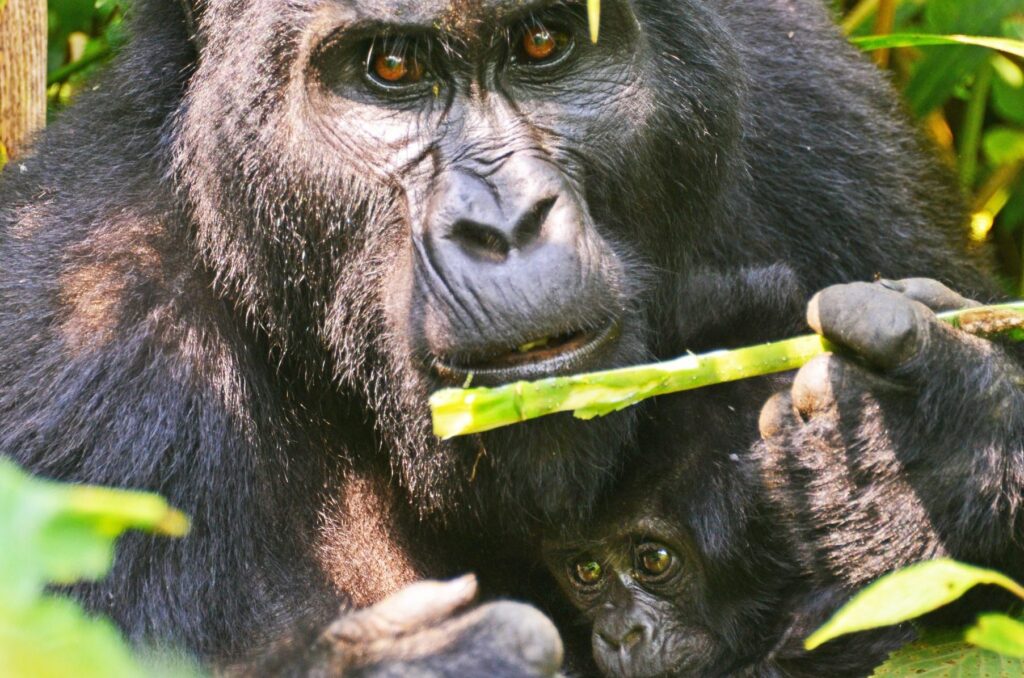
Feeding Habits Among Gorillas Uganda & Rwanda
Understanding the Diet of Mountain Gorillas During Uganda Safaris and Rwanda Safaris
Why Are Feeding Habits Among Gorillas Uganda & Rwanda Important for Wildlife Enthusiasts?
Feeding Habits Among Gorillas Uganda & Rwanda is one of the most fascinating topics for travelers planning unforgettable gorilla trekking adventures in East Africa. Mountain gorillas are among the world’s most endangered primates, and observing how they feed in their natural habitat offers valuable insight into their behavior, social structure, health, and the unique ecosystems they inhabit. During expertly guided Uganda Safaris and Rwanda safari experiences, visitors have the rare opportunity to witness these gentle giants foraging through dense tropical forests while learning from experienced ranger guides and conservation experts.
At EcoQuest Safaris, we believe that gorilla trekking is more than simply viewing wildlife. It is an educational journey that helps travelers appreciate the delicate relationship between mountain gorillas and the forests that sustain them. Understanding the feeding habits of gorillas allows visitors to recognize why conservation efforts are essential and how healthy forests support both wildlife and local communities. The mountain gorillas of Uganda and Rwanda spend much of their day feeding, carefully selecting leaves, stems, shoots, roots, bark, fruits, flowers, and other natural vegetation that provide the nutrients needed to thrive in high-altitude forests.
Travelers searching for Uganda Best Safaris often ask how gorillas survive in dense rainforests without hunting other animals. The answer lies in their highly specialized plant-based diet and remarkable ability to adapt to seasonal changes in food availability. Through carefully designed gorilla trekking experiences, visitors gain first-hand knowledge of gorilla ecology while supporting conservation initiatives that protect these magnificent primates for future generations. EcoQuest Safaris combines expert guiding, responsible tourism, carefully selected safari lodges, and educational experiences to create meaningful journeys that celebrate Africa’s extraordinary wildlife heritage.
What Do Mountain Gorillas Eat During Uganda Safaris and Rwanda Safaris?
Why Are Feeding Habits Among Gorillas Uganda & Rwanda So Unique?
A common question among travelers is, “What exactly do mountain gorillas eat?” The answer highlights one of the most remarkable aspects of Feeding Habits Among Gorillas Uganda & Rwanda.
Mountain gorillas are primarily herbivores, consuming a wide variety of vegetation found within the montane and bamboo forests of Bwindi Impenetrable National Park, Mgahinga Gorilla National Park, and Volcanoes National Park. Their daily diet includes tender leaves, bamboo shoots, wild celery, vines, stems, herbs, thistles, nettles, tree bark, roots, flowers, and seasonal fruits when available. Unlike lowland gorillas, mountain gorillas rely less on fruit because the high-altitude forests where they live produce fewer fruit-bearing trees throughout the year.
Adult gorillas spend many hours every day feeding, often consuming more than 20 kilograms of vegetation to meet their nutritional requirements. Their powerful jaws and large teeth allow them to chew tough plant material that many other animals cannot digest. The digestive system of a gorilla is specially adapted to process large quantities of fibrous vegetation, enabling it to extract essential nutrients efficiently.
Visitors participating in Uganda Safaris frequently observe family groups moving slowly through the forest while feeding together. Younger gorillas learn which plants are safe to eat by watching their mothers and other adult members of the group. This learning process plays a vital role in ensuring the survival of each new generation.
Experienced ranger guides explain how feeding behavior changes according to season, altitude, weather, and food availability, providing visitors with a deeper understanding of mountain gorilla ecology and forest conservation.
How Do Feeding Habits Influence Gorilla Behavior and Family Life?
Why Do Gorillas Spend So Much Time Feeding?
Another frequently asked question is, “Why do mountain gorillas spend most of their day eating?” The answer reflects the nutritional demands of their large bodies and active forest lifestyle.
Mountain gorillas are among the largest living primates, requiring substantial amounts of plant material to maintain their strength and energy. Because leaves and stems contain fewer calories than meat or fruit, gorillas must spend many hours foraging throughout the forest. Their daily routine generally includes feeding during the morning, resting around midday, feeding again in the afternoon, and constructing fresh nests before nightfall.
The dominant silverback plays a crucial leadership role by guiding the family to productive feeding areas while protecting group members from potential threats. Females care for young gorillas as they feed, while juveniles often combine feeding with playful interactions that strengthen social bonds.
During Uganda Best Safaris, visitors are often amazed by the peaceful nature of gorilla family groups. Feeding sessions are typically calm and cooperative, with very little competition for food because the forests of Uganda and Rwanda provide abundant vegetation throughout most of the year.
Observing feeding behavior offers photographers and wildlife enthusiasts outstanding opportunities to witness natural interactions, including grooming, communication, parental care, and playful behavior among young gorillas. These unforgettable moments make gorilla trekking one of Africa’s most rewarding wildlife experiences.
Where Can You Observe Feeding Habits Among Gorillas Uganda & Rwanda?
Which Safari Destinations Offer the Best Gorilla Trekking Experiences?
Travelers often ask, “Where are the best places to observe Feeding Habits Among Gorillas Uganda & Rwanda?” Fortunately, both Uganda and Rwanda provide exceptional opportunities to experience these remarkable primates in protected natural habitats.
In Uganda, Bwindi Impenetrable National Park is home to the largest population of mountain gorillas in the world. The park contains multiple trekking sectors, including Buhoma, Ruhija, Rushaga, and Nkuringo, each offering unique trekking experiences through ancient rainforest ecosystems rich in birds, butterflies, and endemic plants.
Nearby Mgahinga Gorilla National Park protects one habituated gorilla family while also offering opportunities to track golden monkeys and hike the spectacular Virunga Volcanoes.
Across the border in Rwanda, Volcanoes National Park is internationally renowned for its accessible gorilla trekking experiences. The park’s bamboo forests and volcanic slopes provide ideal habitat for several habituated gorilla families while offering visitors breathtaking mountain scenery.
At EcoQuest Safaris, our customized itineraries combine gorilla trekking with other unforgettable experiences, including chimpanzee tracking, wildlife safaris, birdwatching, cultural encounters, mountain hiking, and community visits, creating some of the finest Uganda Safaris and regional primate adventures in East Africa.
Which Safari Lodges Enhance Your Gorilla Trekking Experience?
Where Should You Stay During Uganda Safaris and Rwanda Gorilla Adventures?
Comfortable accommodation enhances every gorilla trekking experience. EcoQuest Safaris carefully recommends outstanding safari lodges located near Uganda’s and Rwanda’s gorilla trekking destinations.
Near Bwindi Impenetrable National Park, guests frequently choose Sanctuary Gorilla Forest Camp, Mahogany Springs Lodge, Buhoma Lodge, and Nkuringo Bwindi Gorilla Lodge, all offering exceptional hospitality and convenient access to trekking trailheads.
Visitors exploring Mgahinga Gorilla National Park often enjoy stays at Mount Gahinga Lodge, renowned for its stunning volcano views and personalized service.
For Rwanda gorilla trekking, premium accommodation includes Bisate Lodge, Sabyinyo Silverback Lodge, Singita Kwitonda Lodge, and Five Volcanoes Boutique Hotel, each providing luxury, comfort, and outstanding proximity to Volcanoes National Park.
These carefully selected safari lodges complement unforgettable wildlife experiences with excellent cuisine, comfortable accommodations, and warm African hospitality.
Why Choose EcoQuest Safaris for Gorilla Trekking?
How Does EcoQuest Safaris Deliver Exceptional Uganda Best Safaris?
At EcoQuest Safaris, we are passionate about delivering authentic, educational, and responsibly managed gorilla trekking adventures. Our experienced safari consultants design personalized itineraries that combine wildlife encounters with cultural experiences, conservation education, and comfortable travel arrangements.
Our professional guides possess extensive knowledge of gorilla behavior, feeding ecology, forest biodiversity, and conservation initiatives. Throughout every safari, they help visitors understand not only what gorillas eat but also why protecting their natural habitat is essential for the future of East Africa’s biodiversity.
We proudly support responsible tourism by working closely with conservation authorities, local communities, and environmentally responsible safari lodges. Every safari contributes directly to gorilla conservation, habitat protection, research, and community development.
Whether you are planning your first gorilla trek or seeking a comprehensive wildlife itinerary combining gorillas with classic game viewing, birdwatching, and chimpanzee tracking, EcoQuest Safaris creates unforgettable Uganda Best Safaris tailored to your interests and travel goals.
Conclusion – Discover the Feeding Habits Among Gorillas Uganda & Rwanda
Understanding Feeding Habits Among Gorillas Uganda & Rwanda enriches every gorilla trekking adventure by revealing the remarkable relationship between these gentle primates and the forests they call home. Their carefully adapted plant-based diet, peaceful social behavior, and dependence on healthy ecosystems highlight the importance of continued conservation throughout Uganda and Rwanda.
Through expertly planned Uganda Safaris, visitors can witness mountain gorillas feeding naturally in Bwindi Impenetrable National Park, Mgahinga Gorilla National Park, and Volcanoes National Park while enjoying comfortable safari lodges, experienced guides, and meaningful conservation experiences.
With EcoQuest Safaris, every journey combines education, adventure, responsible tourism, and unforgettable wildlife encounters, allowing travelers to discover why mountain gorillas remain among Africa’s most treasured natural wonders and why Uganda continues to rank among the leading destinations for authentic African safari experiences.